Al-Attiyah Foundation CEO Roundtable Reflects on the Defining Global Energy Shifts of 2025 and the Road to 2026
04 December 2025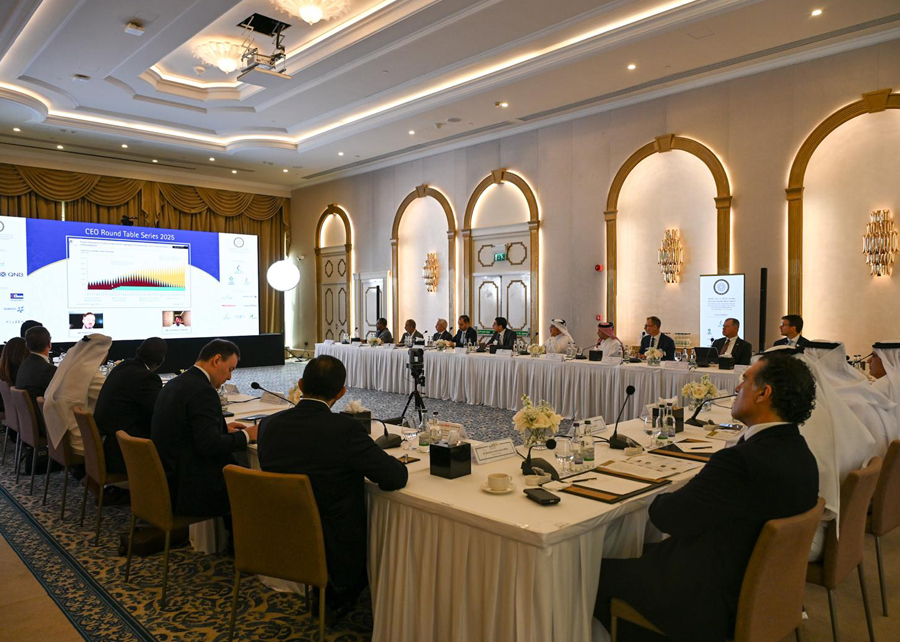
Doha: 4th of December 2025
Yesterday, industry leaders, policymakers, and global energy experts gathered in Doha for the Al-Attiyah Foundation’s fourth CEO Roundtable of the year to examine how the defining events of 2025 have reshaped global energy systems and what these shifts mean for the year ahead.
Held under the Chatham House Rule, the event, titled “The Road from 2025 to 2026: Energy, Climate, and Global Shifts,” provided a candid and forward-looking forum to discuss the accelerating pace of the energy transition, the pressures facing global supply and demand systems, and the strategic dilemmas confronting governments and companies during a period of heightened uncertainty.
Moderated by Nawied Jabarkhyl, Senior Director and Head of International Media Relations, the roundtable featured expert contributions from Eduardo G. Pereira, International Energy Attorney; Mr. Alan Gelder, VP Chemicals & Oil Markets at Wood Mackenzie; Dr. Bassam Fattouh, Director of the Oxford Institute for Energy Studies and Professor at SOAS, University of London; and Robin Mills, CEO of Qamar Energy.
Participants noted that 2025 has become one of the most consequential years in recent energy history, with global electricity demand rising by approximately 5%, driven largely by the rapid expansion of data centres, digitalisation, artificial intelligence, and electrification. In China and India, demand growth reached approximately 5% and 4% respectively, with both nations expected to accelerate further in 2026. Renewables have made historic gains, overtaking coal as the world’s largest source of electricity by late 2025—one year ahead of earlier projections—while nuclear generation reached record levels. At the same time, extreme climate events, including the unprecedented 2023–2025 coral bleaching affecting around 84% of reef ecosystems, added further urgency to energy-system resilience and climate policy reforms.
Against this backdrop, the roundtable explored how energy companies and governments are navigating rising volatility, shifting market fundamentals, and tightening policy expectations. The implications of the outcomes from the just concluded 2025 United Nations Climate Change Conference (COP30), also featured in the roundtable discussion. Delegates examined how supply chains are responding to new pressures; how emerging technologies, including AI, grid-scale storage, and hydrogen, are influencing strategic investment; and how macroeconomic factors, from inflation to mineral supply constraints, continue to shape the energy transition. The discussions also highlighted the widening gap between clean energy investment—at a record US$2 trillion in 2024—and the US$5.6 trillion required annually to remain aligned with global net-zero pathways.
Speaking after the roundtable, Fahad Bin Hamad Al-Mohannadi, Member of the Board of Trustees of the Al-Attiyah Foundation, said: “It was a pleasure to welcome our members, partners and expert guest speakers to this significant event. The global energy system is undergoing profound shifts that will shape the coming years. This roundtable provided a valuable platform for attendees to assess the opportunities and challenges emerging across the sector and to consider how best to navigate these changes to ensure energy security, drive innovation, improve sustainability, and maintain global competitiveness.”
The CEO Roundtable Series remains a cornerstone of the Foundation’s mission to facilitate high-level dialogue and deliver informed insights on the future of global energy. For more information on the Al-Attiyah Foundation’s events, publications, and research, visit www.abhafoundation.org.