The Forgotten Energy Crisis: How a Hidden Threat Could Derail Operations in the Years Ahead
22 June 2026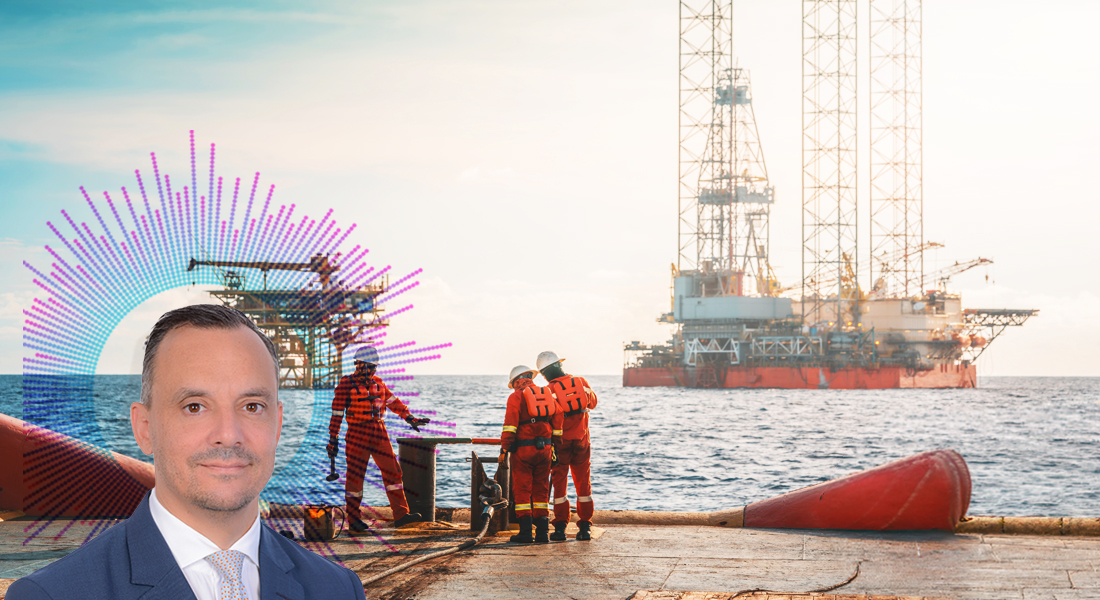
Doha: 22nd of June 2026
As the energy industry grapples with rising geopolitical uncertainty and the transition to renewables, another potentially damaging threat is emerging almost unnoticed. Hidden beneath daily operations, it risks undermining the resilience of oil and gas infrastructure across the Gulf and beyond.
Speaking to the Al-Attiyah Foundation Podcast, Bradley Nordal, CEO of IUGO Technologies (a next-generation AI virtual business partner designed for today’s mobile and field-based workforce), revealed the consequences of the gradual loss of operational knowledge.
“The questions we're about to discuss are no longer theoretical questions,” Nordal said. “They're questions about operational efficiency, and they're questions about national resilience.”
The discussion centred on what Nordal termed “degenerative knowledge” – the slow erosion of operational understanding that occurs when experienced personnel leave organisations without transferring the reasoning behind critical decisions.
“Knowledge loss is an event,” he explained. “But degenerative knowledge is what happens between those events.”
The challenge comes at a time when the industry faces significant demographic pressures. According to the Global Energy Talent Index, workers over the age of 45 now account for nearly half of the oil and gas workforce, while younger talent pipelines remain constrained. Industry forecasts also point to growing shortages of skilled technical personnel across the coming decade.
To illustrate the issue, Nordal described a hypothetical offshore platform where an operator is forced to make a split-second decision during a compressor surge based on a lesson learned years earlier from a now-retired colleague.
“The judgment that saved the platform that night was, in the most literal sense, a memory of a memory,” he said.
The problem, Nordal argued, is that organisations often succeed in preserving reports, procedures and technical documentation while failing to capture the expertise that connects them.
“The artifact survives, but the judgment or the logic does not,” he noted.
Drawing on lessons from both the Piper Alpha disaster, a catastrophic offshore explosion in the North Sea in 1988 that killed 167 men, and the rapid recovery of Saudi Arabia’s Abqaiq processing facility following the 2019 attacks, Nordal highlighted the role that institutional knowledge plays during periods of crisis.
“When operational knowledge degrades, the consequences arrive at the worst possible moment without warning,” he said. “When it is captured, governed, and resilient, organisations survive things that should have destroyed them.”
The conversation also explored the implications of artificial intelligence, which has become a major focus for energy companies across the Gulf. While many organisations view AI as a solution to workforce and productivity challenges, Nordal cautioned against deploying technology without first addressing underlying knowledge-management gaps.
“AI deployed onto degenerative knowledge amplifies it,” he warned. “If your organisation has captured deep operational reasoning, AI extends and surfaces it brilliantly. If your organisation has graveyards of outputs and tribal knowledge, AI will confidently produce answers that look authoritative, but they're not.”
According to Nordal, the next phase of digital transformation must focus on preserving expertise rather than replacing it.
“Digitalisation never did replace expertise,” he said. “What digitalisation did is reveal how much expertise had quietly been propping up systems that were never engineered for resilience.”
Concluding the discussion, he urged industry leaders to act before knowledge gaps become operational failures.
“The question is whether we choose to capture what we know now, while we still can, so that the next generation inherits the judgment and not just the artifact.”
The full podcast is available on The Al-Attiyah Foundation’s YouTube channel and website at www.abhafoundation.org.