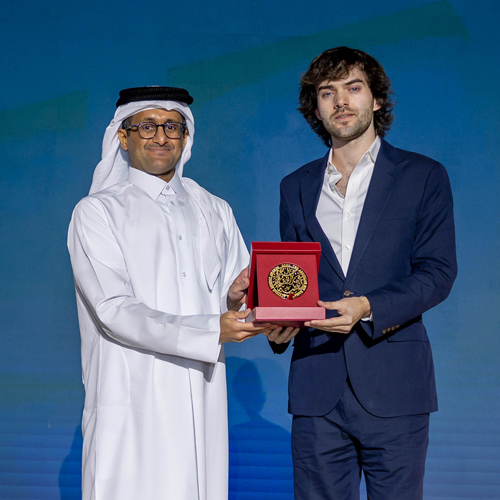
Year - 2026
International Young Energy Leader Award
Mr. Boyan Slat
Founder of The Ocean Cleanup
Boyan Slat has become one of the world’s leading young environmental innovators through his efforts to combat global plastic pollution. At just 18, he founded The Ocean Cleanup, transforming a school project into a globally recognised initiative focused on removing plastic waste from oceans and rivers.
His organisation develops and scales solutions to rid the world’s oceans of plastic. Under Mr Slat, The Ocean Cleanup became the first and only organisation to extract plastic waste from the Great Pacific Garbage Patch, successfully demonstrating that removing plastic from oceanic gyres is possible.
To address the inflow of plastics coming from rivers, he expanded the initiative with solar-powered “Interceptor” systems designed to stop plastic waste in rivers before it reaches the ocean, addressing pollution at its source. He later developed a range of Interceptors that can fit into local contexts and maximise available infrastructure across different locations. The work in rivers has led to the creation of the 30 Cities Program, which sees the organisation deploying its proven Interceptor solutions across some of the world’s most polluting urban waterways to reduce global riverine plastic flows into the ocean by up to one-third by the end of the decade. To date, The Ocean Cleanup operates 26 Interceptors in 12 countries and has removed over 62 million kilograms of waste from aquatic environments.
Mr Slat’s work has earned widespread international recognition, including the United Nations Environment Programme’s “Champion of the Earth” award, as well as recognition from the World Economic Forum and inclusion in the Forbes 30 Under 30, TIME Climate 100 and Foreign Policy Global Thinkers lists.
Mr Slat and his team are now working on a new strategy to hunt plastic hotspots in these gyres in real time by using AI, drones and modelling, which is expected to improve the speed and efficiency of the cleanup while reducing its associated carbon emissions.